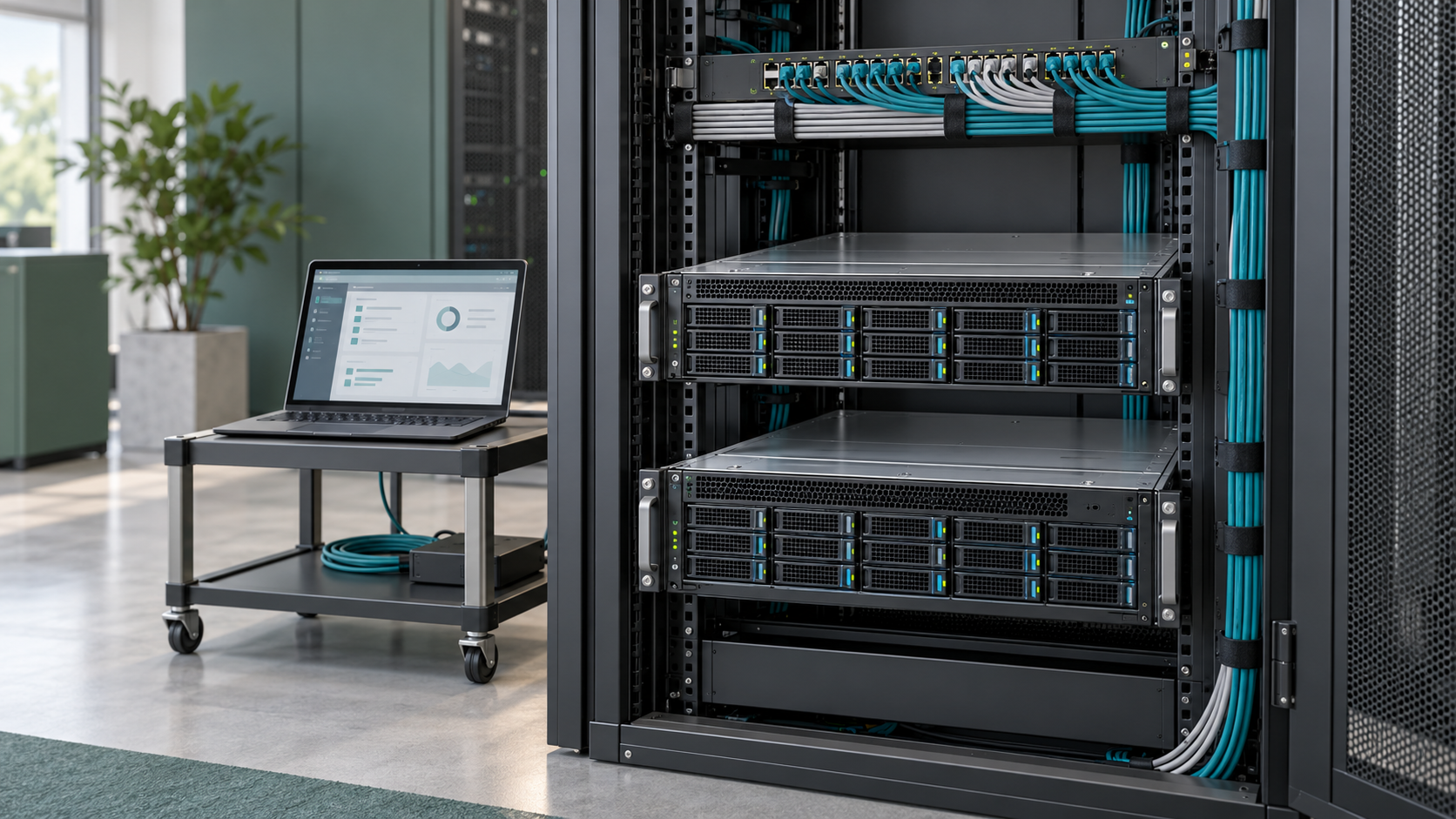
The foundation of my work
Servers and storage are central to my work and to the future I want to build. A business may depend on its systems for accounts, applications, shared files, records, or daily operations. My vision is to make the infrastructure behind that work understandable and dependable, including for organizations without a large internal IT team.
The starting point is the business process. I want every recommendation to answer what will run on the server, how many people depend on it, what happens during an interruption, and who will maintain it. Choosing equipment becomes more useful when those questions are answered first.
Plan the workload before choosing the platform
A file server, application server, database host, and virtualization host have different priorities. My intended approach is to document processor, memory, storage, connectivity, and application requirements together, rather than recommend a server on processor specifications alone.
Capacity planning should include present demand, sensible growth headroom, and budget limits. Compatibility with the intended operating system, application, expansion components, and management tools needs verification for the actual configuration. The aim is a fit-for-purpose system rather than unnecessary complexity.
Make virtualization practical
Virtualization can be explored where it suits the workload and operating model. My vision is to explain how physical resources relate to virtual machines, how workloads share capacity, and why a single host still needs a recovery plan.
A proposed deployment workflow would document resource allocation, networking, storage layout, startup dependencies, administrative access, and backup responsibilities. Consolidation should be evaluated alongside the consequences of a host failure, so that convenience is not mistaken for resilience.
Treat the installation as a complete environment
Server reliability depends on more than the chassis. Rack arrangement, airflow, power supply, suitable protection, network paths, access control, and identification all affect the installation. Each site has its own constraints, and the design should record the decisions made around them.
I want installation handovers to include an inventory, a clear diagram, ownership of administrative access, normal operating checks, and an agreed method for handling faults. Documentation should remain useful to the next technician, not only the person who installed the equipment.
Maintenance should protect continuity
My vision includes a disciplined maintenance approach: review health observations, assess changes before applying them, plan maintenance windows, and check the outcome afterwards. The right schedule depends on the equipment and the business, rather than a universal calendar.
Firmware, software, configuration, and hardware changes should have records and a recovery path where appropriate. Businesses should understand what is included in support, what needs specialist assistance, and which decisions require an agreed interruption.
A practical business scenario
Consider a small organization whose accounts, shared documents, and internal application depend on one machine. The first task is to map these dependencies and agree recovery priorities. A proposal can then compare a suitable physical setup with a virtualized approach and explain the trade-offs in capacity, support, and recovery.
This example illustrates how I want to work: define the requirement, document the design, validate the setup, and leave behind a plan for the next failure or upgrade. It is an approach to service development, not a claim about a particular installation or availability guarantee.
Proposed next steps
- Map business applications and interruption impact.
- Validate a suitable platform and document the complete design.
- Deploy with recorded configuration and recovery responsibilities.
- Review health, changes, capacity, and service feedback.
What progress should show
- Workload suitability and available capacity
- Completeness of inventory and configuration records
- Recovery readiness for important applications
- Recurring faults and maintenance outcomes
This is Arvind Mishra’s vision and proposed development approach. Future categories, capabilities, partnerships, and milestones are ambitions unless explicitly described as current work. Product photographs are AI-generated illustrations, not photographs of manufactured inventory.