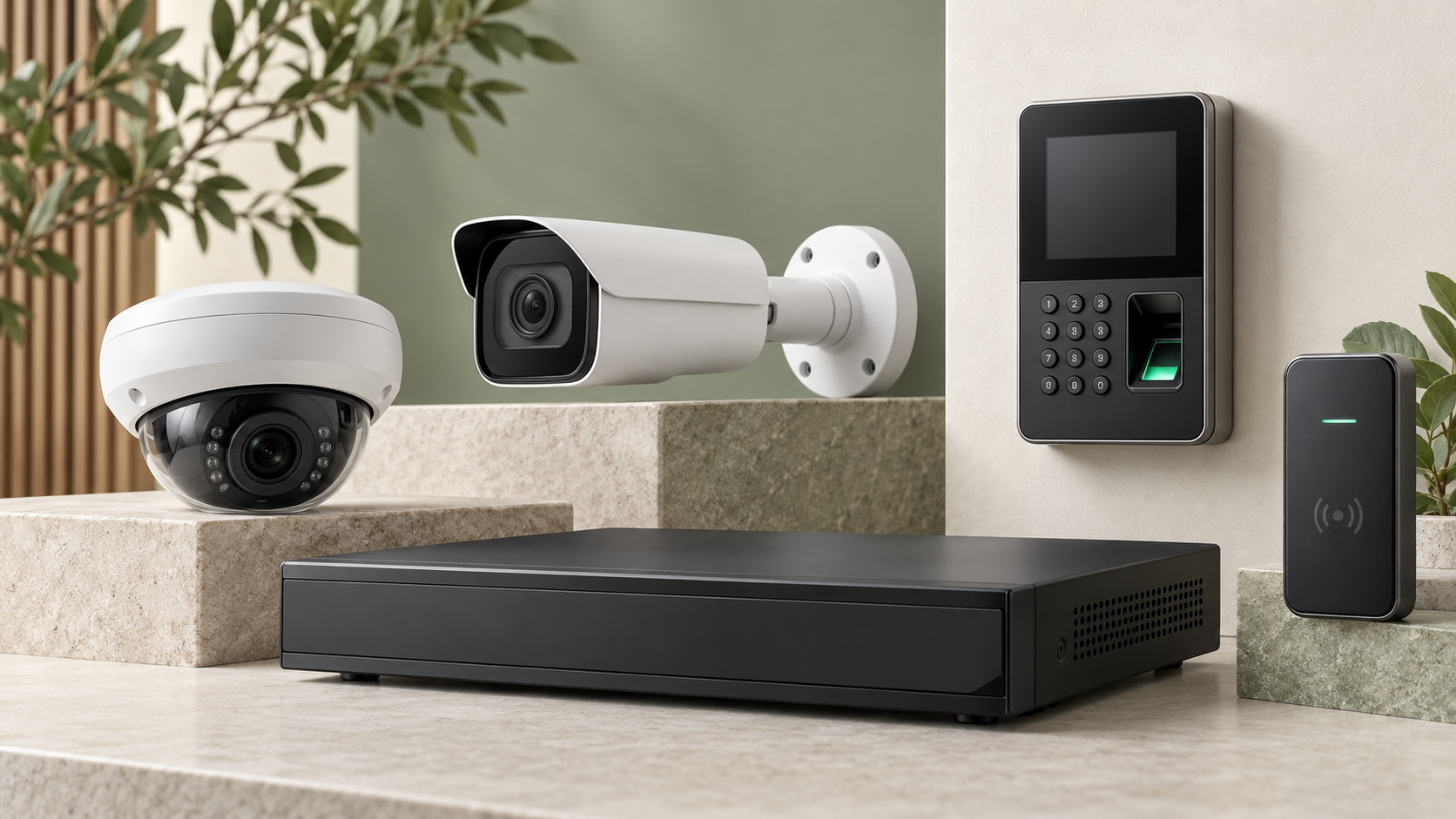
Start with what people need to protect
Personal files, business records, accounts, and device access all deserve attention. My vision is to explain protection in terms of everyday decisions: who has access, what happens if a device fails, and how information can be recovered.
Security education should be understandable without creating fear. The goal is to help people recognize common risks, improve basic habits, and know when qualified help is needed.
Solve the observation problem first
A camera should be selected around what needs to be observed, where it will be installed, and the conditions it must work in. The first question is the purpose of the view, followed by placement, lighting, network design, storage, and maintenance.
My vision is to explain these trade-offs in a way that helps users avoid installations that look complete but do not meet their real requirements. Demonstrations should show both useful results and limitations.
A proposed IP camera manufacturing direction
I want to expand our manufacturing scope towards IP cameras and related surveillance equipment. The proposed development process would begin with clearly defined use cases, component evaluation, prototype assembly, and repeatable checks before any product is offered.
Image behavior, heat, power compatibility, network stability, enclosure suitability, and serviceability would need evaluation for the intended model and environment. Specific features, ratings, certifications, or release dates should only be published when verified.
The camera is only part of the system
Useful surveillance also depends on recording, networking, power, time settings, access management, and the ability to retrieve footage. A handover should explain who controls the equipment and how normal operation is checked.
The product family may eventually include recorders, mounts, power accessories, and other supporting items. Each category needs its own feasibility and quality work rather than being treated as automatically available.
Treat connected equipment as part of the network
Cameras, recorders, attendance terminals, and other devices may handle important data or provide access to internal systems. Their accounts, remote access settings, updates, and handover documentation should be considered alongside their physical installation.
My product-development ambition includes understandable configuration, clear ownership handover, and transparent information about supported updates. These are intended principles for future work, not statements of capabilities in an unlaunched product.
Respect the people in the picture
Surveillance should be designed for a defined purpose, with attention to appropriate camera placement, access restrictions, and data handling. Privacy and applicable requirements should be reviewed for the actual site.
I want installation education to include these responsibilities alongside technical skills. Better electronic security should mean a useful, maintainable system with clear ownership—not an unsupported promise that incidents cannot happen.
Proposed next steps
- Define the scene and intended viewing purpose.
- Evaluate complete-system prototypes.
- Validate installation and retrieval workflows.
- Publish verified capabilities and clear limitations.
What progress should show
- Results in defined day and night scenarios
- Recording and retrieval reliability
- Power and network stability observations
- Clarity of access and maintenance handover
This is Arvind Mishra’s vision and proposed development approach. Future categories, capabilities, partnerships, and milestones are ambitions unless explicitly described as current work. Product photographs are AI-generated illustrations, not photographs of manufactured inventory.